By Anggi M. Lubis, Robby Maqoma and Habibah Hermanadi
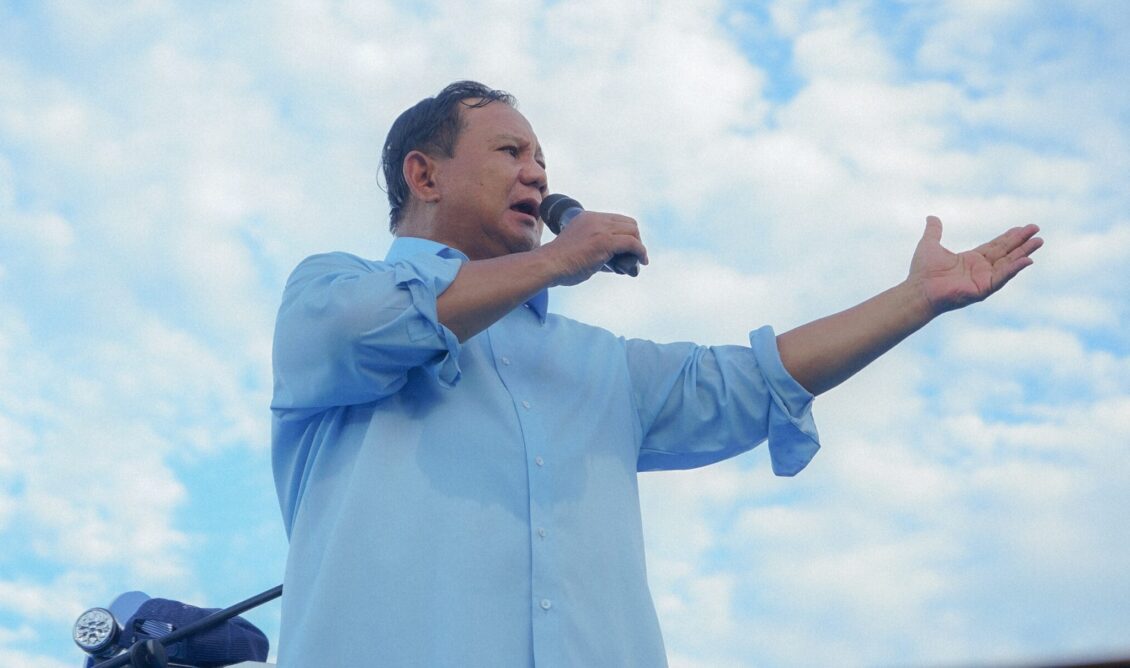
In the dim aftermath of Prabowo Subianto’s victory, the nation is left to grapple with the unsettling reality of his ascent to power, succeeding Joko “Jokowi” Widodo’s administration, which has become repressive and anti-science in its later years. For some, the former general’s win is not easy to understand: Prabowo is tainted by his past human rights abuses, his close ties to the New Order dictatorship and the implicit support he has received from Jokowi, whose son Gibran Rakabuming Raka is Prabowo’s running mate and was appointed under an alleged violation of the 2017 Elections Law.
The result of the world’s biggest democratic election seemingly foreshadows a potential repression of freedom of speech. In his poignant reflection, Ian Wilson of Murdoch University in Australia captured the mood with a somber tone, calling it an “election to end all elections”. Indeed, Prabowo and Gibran’s win marks a crucial moment in Indonesian politics, showing the concentration of power in groups that subvert democracy and scientific thinking.
As science communicators working closely with the academic circle, many of whom reject the idea of Prabowo securing the country’s throne, his conquest in the three-way race shocked us. Indeed, we were fully aware that Prabowo was at the forefront of electorate surveys. But many of us hoped there would be a second round and a turn of events — which did not happen.
The bitter truth is that we lived in a bubble and overlooked the silent majority. In a country where scientific discourse is often limited to ivory towers, failing to connect with the grassroots has proven costly. Traditionally seen as bastions of knowledge, universities often fall short in their communication efforts, with their PR teams primarily focusing on on-campus activities and professorial promotions.
This situation was exacerbated by the current state of science communication. The current state of public discourse is shackled by self-censorship, a consequence of the polarization experienced between 2014 and 2019. The fear of repression and social divisions – including among our closest inner circles – has stifled the voices of the general society and scholars, limiting their impact on public discourse.
Yet, amid the despair, there lies a glimmer of hope – an opportunity for academics to rise, unite and redefine their societal role. Prabowo and Gibran’s electoral triumph should serve as a wake-up call for the academic community, a stark reminder of the urgent need for a more robust and accessible science communication strategy beyond the confines of classrooms and discussions far removed from the daily lives of ordinary Indonesians.
Indonesia boasts vast intellectual capital, with over 4,000 higher education institutions spanning from Sabang to Merauke. This is a strength we should not ignore. The recent momentum, fueled by dozens of campuses expressing concern about the erosion of democracy, presents a remarkable opportunity.
Academics must seize this moment to redefine their role and strengthen their function in science communication while engaging in concerted action and nurturing solidarity among scholars. It is time for Indonesian scholars to break free from the confines of the ivory tower and actively connect with the wider public. Their voices need to resonate not only in lecture halls. This means adopting a more proactive, hands-on approach, utilizing platforms like traditional media, social media and community forums to amplify their voices and engage with diverse audiences.
Science communication is not just about disseminating information — it is about fostering dialogue, building trust and empowering grassroots to make informed decisions. The experiences of other nations, such as Brazil, offer valuable insights into the transformative power of science communication.
Brazil has a rich academic engagement and social movement history, particularly in response to a list of controversial policies of Jair Bolsonaro’s regime. The former strongman was in office from 2019 to 2022.
Brazilian scholars were at the forefront of efforts to monitor the deforestation of the Amazon rainforest. They have mobilized against Bolsonaro’s attacks on higher education, from budget cuts to censorship, by organizing campaigns to defend public education and resist government interference in academic affairs. One pivotal strategy stands out: By consolidating partnerships with civil society organizations, they played a crucial role in resisting Bolsonaro’s authoritarian tendencies, defending democratic institutions, challenging misinformation and promoting social justice and human rights.
For Indonesia, the stakes could not be higher. In an era of rampant misinformation and disinformation in social media and messaging platforms, an uninformed public poses a grave threat to democracy. Scientists have a moral imperative to speak out, confront falsehoods and champion evidence-based decision-making.
Ultimately, the culture of science can serve as a powerful catalyst for societal change, providing citizens with the knowledge and tools they need to hold their leaders accountable. By strengthening science communication efforts, academics can help cultivate a more informed, engaged citizenry—a defensive wall against democratic decline and authoritarianism. In the face of uncertainty, there is cause for optimism.
The victory of Prabowo and Gibran may have dealt a blow to Indonesia’s democratic aspirations, but it has also stimulated a newfound sense of urgency among academics and civil society. Indonesian academics stand poised to make a profound impact on the trajectory of our nation’s democracy.
Now is the time to harness this momentum, build solidarity and reclaim the narrative of Indonesian democracy. The road ahead may be fraught with challenges, but with determination and collective action, a brighter future remains within reach.
*** The writers work for The Conversation Indonesia. The views expressed are personal.
This article was published in thejakartapost.com. Click to read: https://www.thejakartapost.com/opinion/2024/02/17/in-the-wake-of-prabowos-win-rethinking-science-communication.html.
This article was published in thejakartapost.com. Click to read: https://www.thejakartapost.com/opinion/2024/02/17/in-the-wake-of-prabowos-win-rethinking-science-communication.html.